My House Was Surrounded at Midnight Over Something My Son Posted Online
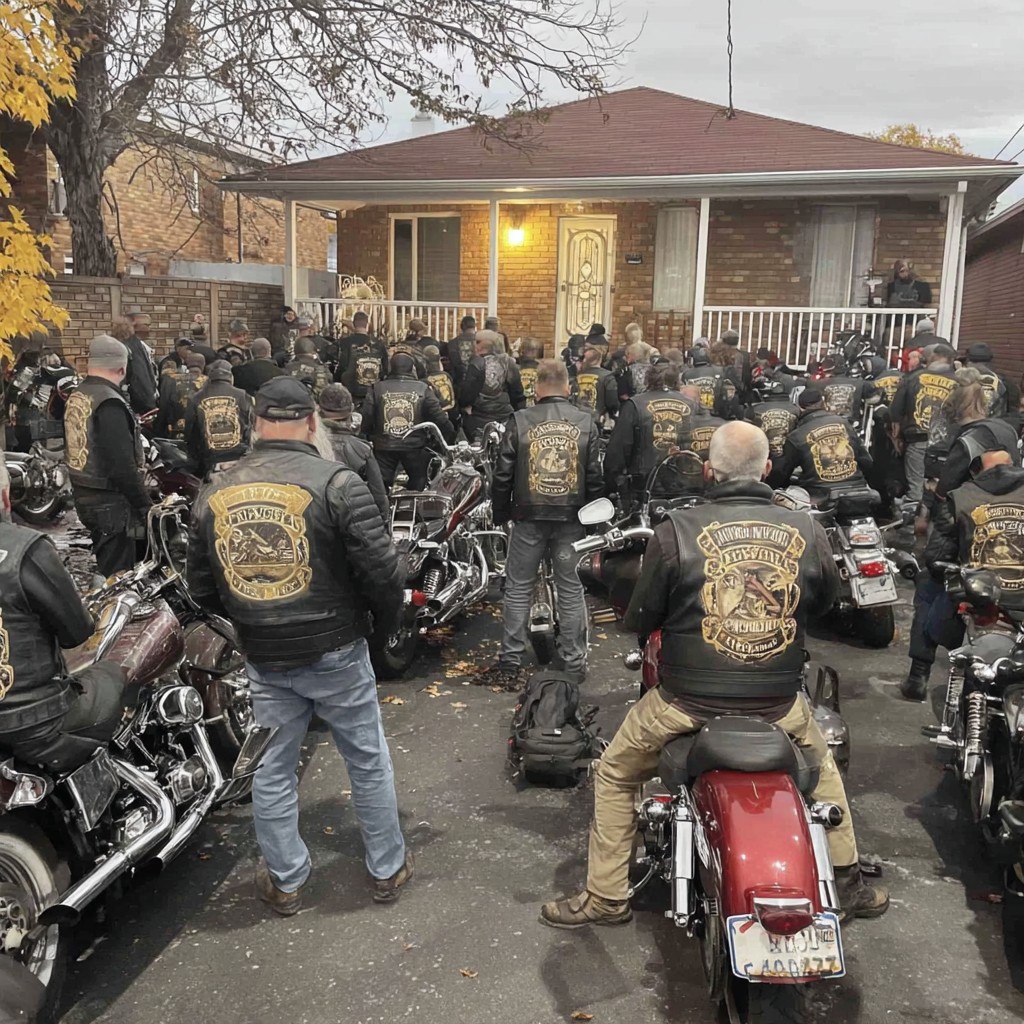
The rumble of motorcycles started outside my house just past midnight, and my first instinct was to call the police on every last one of them.
I’ve never liked bikers. Never. Loud, rude, careless about rules, always disturbing the peace. Our quiet suburban streets were not made for people like that. So when I heard the growl of engines outside at 12 AM, I grabbed my phone and peered out the window, ready to dial 911.
Fifteen bikes. Then twenty. Then thirty, all rolling to a stop along my curb. Leather jackets, long beards, arms covered in tattoos—every stereotype I despised about bikers in one place. But they didn’t leave. They just stood there, engines now silent, staring at my house. At the second-floor window of my son’s bedroom.
Tyler. Sixteen. My son. Quiet, seemingly normal. Mostly holed up in his room, either on the computer or gaming with friends. I thought he was just a regular teenager. I had no idea what he was actually posting online, what he was planning, the dark corners of the forums he was frequenting where anger could turn into something terrifying.
Then the doorbell rang. I yanked it open, prepared to yell at whoever dared trespass. The largest of the bikers stood there, phone in hand, and in seven words froze me to my core:
“Your son’s planning a school shooting tomorrow.”
I’m Robert Chen. Fifty-two years old. Lawyer. Husband. Father. Resident of Westwood Acres. Neighborhood association president. Everything orderly. Everything proper. And I hated bikers.
They were everything that annoyed me: noise, mess, disregard for rules. I’d complained to the police multiple times. And now they were here, in force, outside my home, staring at us like predators.
“Robert, what’s going on?” my wife Linda whispered, peeking out from the window.
“I… I don’t know,” I said, heart hammering. “I’m calling the police.”
I was reaching for my phone when the doorbell rang again. Three insistent chimes.
I opened the door. “You have thirty seconds—”
The biker lifted his phone. “Is this your son?”
On the screen was Tyler’s face, taken from some private account I didn’t know existed.
“How did you get this?” I asked.
“Is this your son?” he repeated, calm, terrifyingly calm. Behind him, thirty other bikers stood silently. Watching.
“Yes, but—”
“Your son is planning a school shooting tomorrow. Third period. He’s posted detailed plans, weapon specifications, a manifesto. We’ve been monitoring him for three weeks.”
The world tilted. “Impossible. Tyler’s a good kid. He wouldn’t—”
“Listen carefully,” the biker said. He was massive. Maybe six-four, leather vest, gray beard. “I’m Frank Morrison. Veteran, Iraq War. I run a monitoring group for online extremist activity. Hate groups. Forums where kids like your son radicalize each other.”
I tried to protest. “Tyler’s not—”
“Three weeks ago: ‘Tomorrow they’ll know my name.’ Two weeks ago: detailed school layouts. Last week: ‘I’ve got everything I need.’ Yesterday: ‘One more day.’”
My legs gave out. “No. Tyler wouldn’t—”
“Is he home?”
“Yes. In his room. Sleeping.”
“Has he seemed withdrawn? Angry?”
I thought about the past months. Tyler stopped eating dinner with us. Barely left his room. Snapped when asked about school. But that’s normal teen behavior, right?
“Mr. Chen,” another biker stepped forward. Older. Stern. “Jack. Retired FBI profiler. I’ve read all his posts. He fits every marker. Tomorrow, third period, he intends mass murder.”
Linda grabbed my arm, trembling. “This can’t be true. Tell them it isn’t.”
But deep down, I knew I had ignored warning signs.
“Why didn’t you call the police?” I asked.
“We did. Three weeks ago. Reported him. Without direct threats or evidence of weapons, they couldn’t act. Told us to stop wasting time. So we monitored. Waiting, hoping he’d back down. He didn’t. His last post: two hours ago. ‘See you all tomorrow.’”
“I need to see his room.”
“Not yet,” Jack said. “First, we need to explain what we’ll find. Your son has been buying gun parts online. Building an AR-15 from unregistered pieces. No paper trail, no background checks. He’s been making explosives at home.”
“In our house?” Linda’s voice cracked.
“Most likely in his room or garage. Somewhere you wouldn’t think to check.”
I had always given Tyler privacy. Trusted him. Never went into his room.
“Why are you here?” I asked. “Why not just call the police?”
“Police would raid. Arrest him. That may be necessary,” Frank said. “But we wanted to give you a chance. Find the evidence. Turn him in yourselves. Give him a chance to surrender. Get help instead of committing murder.”
“Why?”
Frank paused. “Fifteen years ago, my nephew posted similar things. Nobody monitored him. He walked into his school in Colorado. Killed four people. Then himself. Seventeen years old. Just a kid. Nobody noticed. We started this group after Parkland. Veterans. IT professionals. Parents. We track threats. Prevent attacks. Your son is number twelve.”
“How?”
“Sometimes we alert police. Sometimes we come ourselves. Let the kid know someone is watching. That they’re not invisible. Often that’s enough.”
Jack stepped closer. “Mr. Chen, I know you hate us. Noise complaints. Calls to police. Neighborhood association issues. We know.”
Shame washed over me. “Then why help?”
“Because our kids go to school with yours. Because tomorrow, third period, my grandson is in the same class Tyler plans to attack.” His voice cracked. “I’d rather save your son than bury mine.”
Linda sobbed. “What do we do?”
“We need evidence. Then call police. Psychiatric help. Arrest if necessary. Before anyone is harmed,” Frank said.
I led them inside. Five bikers followed. The rest stayed outside
We gathered outside Tyler’s bedroom door. My heart was slamming so hard I could feel it in my throat. I could hear faint music playing inside, the rhythmic tapping of keys.
“He’s awake,” I whispered.
“Probably finalizing whatever he’s planning,” Jack murmured. “Mr. Chen, when that door opens, don’t panic. Don’t let him lock the computer. Don’t let him delete anything. Stay out of the way, but stay present.”
I nodded, although my legs felt like they weren’t part of my body anymore.
With a deep breath, I pushed the door open.
Tyler spun around in his chair so fast the wheels squealed. First he saw me—confusion, irritation. Then he saw the men behind me, filling the doorway with leather, denim, and grim expressions. His face drained of color.
“Tyler,” I said softly, “we need to talk.”
His eyes flicked toward the screen, and I knew before he even moved what he was going to do.
He lunged.
Frank reacted faster. He stepped forward, blocking Tyler’s reach with one arm like swatting away a child. Another biker, Jack, was already at the computer, snapping photos of the screen before anything could disappear.
“What are you doing?!” Tyler screamed, voice cracking. “Dad, get them out of here! They can’t be in my room!”
I stepped closer, and when I looked at the monitor, my stomach collapsed.
A forum filled with violent imagery. Threads about “purifying schools.” Weapon schematics. Maps of Jefferson High. And right there, highlighted:
Username: VengeanceDay
Post: “Tomorrow is the day. They’ll all pay.”
Linda gasped behind me. “Oh God… Tyler… what is this?”
Tyler’s breathing turned ragged. “You don’t understand! They deserve it! They made fun of me! They humiliated me! I’m not just going to sit there and take it!”
Frank knelt down so he was eye-level with my son. His voice was low, steady—too steady. “So you were going to kill them? That was your solution?”
“They’re not innocent!” Tyler yelled. “Everyone thinks they are, but they’re not!”
Jack moved past us to the closet, pushing aside clothes. Then he froze. “Mr. Chen… you’d better see this.”
I walked over.
Behind the shirts and hoodies was something I’ll never forget:
AR-15 parts laid out meticulously. Boxes of ammunition. Several crude explosive devices wrapped in tape and wires. A tactical vest, dark and heavy. A spiral-bound notebook labeled “Manifesto” in block letters.
Forty pages inside, full of names. Teachers. Students. Staff. Words like “primary target” and “secondary target.”
My son had built an arsenal.
My son.
“Tyler,” I whispered, voice broken, “why would you do this?”
He stared at the floor, trembling. “Because I’m tired of being no one. Tomorrow they would’ve known who I was. They’d finally notice me.”
“Notice you as what?” Frank asked gently. “A murderer?”
Tyler’s chin trembled. His eyes filled with tears—not remorseful ones, but frustrated, angry tears. “I just wanted them to hurt like they made me hurt…”
“And killing seventeen people would fix that?” Jack asked.
“Seventeen?” Linda echoed, voice faint.
Jack lifted the notebook. “Seventeen confirmed targets. More if opportunity allowed.”
Linda collapsed onto the edge of the bed. I reached for the wall to steady myself. Everything felt wrong. Unreal.
Frank turned to me. “Sir, this is enough evidence to call the police right now. This isn’t just anger or online fantasies. He’s fully equipped and ready.”
I nodded, numb. “Do it.”
One of the bikers stepped out the door and immediately dialed. They’d been prepared.
Tyler’s panic erupted again. “You can’t call them! You don’t understand! I’m not the villain! They bullied me! I’m the victim!”
Frank looked at him, eyes full of something I couldn’t quite read—sadness, maybe. Pity. Experience. “Son, you were going to kill people who had nothing to do with your pain. That’s not justice. It’s tragedy.”
Tyler broke then. His shoulders shook as he cried—not from regret, but because his plan was unraveling in front of him.
The police arrived in less than fifteen minutes. Several officers. A detective. Bomb squad technicians. They stormed into the room, stunned at what they found. The guns. The devices. The maps. The lists.
Seventeen kids would have died tomorrow. In third period.
Tyler was handcuffed. He screamed the whole time. Not words—just rage. I watched my son, the boy I’d raised, the boy I’d tucked into bed, the boy whose soccer games I’d cheered for, being led out like a stranger. Like someone dangerous.
Like someone I didn’t recognize.
The bikers didn’t leave. They gave statements. Handed over screenshots. Timestamps. IP logs.
They’d documented everything.
Everything my son had done.
Everything I’d failed to notice.
Linda kept asking, “How did this happen? How did we lose him like this?”
Jack sat beside us, his old hands folded in front of him. “It starts small,” he said. “A kid feels abandoned. Hurt. Alone. They find communities online that fuel their anger. They find people who validate their darkest thoughts. And soon, violence feels like the only way to be seen.”
Frank added quietly, “Kids like Tyler aren’t born monsters. They’re shaped in places parents never look.”
And they were right. The signs had been there. I’d ignored them all.
The next morning, the sun rose over Westwood Acres, but there was no light in our home. The house felt heavy, suffocating. Tyler was in custody. The police had taken everything from his room—computers, guns, explosives, notebooks, and a detailed plan that could have killed seventeen students. My mind replayed the events over and over. How had it come to this? How had I failed my son?
The bikers stayed until mid-morning, quietly leaving one by one. Frank lingered last. He handed me a small folder. Inside were copies of Tyler’s posts, screenshots of the forum, and a detailed account of how they’d monitored him for weeks.
“Keep this,” he said. “You’ll need it. Not just for the trial, but for Tyler. So you can understand the path he was on.”
I nodded. Words wouldn’t come. I was too ashamed. Too relieved. Too angry.
That afternoon, Jefferson High held an emergency assembly. Parents, students, and staff were all gathered. The principal, her eyes red from tears, introduced the bikers who had saved our school and my son.
Fifty of them showed up. Leather jackets, beards, tattoos—a presence that normally would have felt intimidating—but now they radiated authority and protection.
Frank took the stage. “We’re veterans. Parents. Grandparents. We’ve seen what hate and isolation can do. We monitor online forums where kids find anger and validation in violence. Sometimes, we intervene. Sometimes, it’s too late. Tonight, it wasn’t.”
He spoke directly to the students. “If you ever feel isolated, bullied, or angry… tell someone. Don’t let it grow inside. It can hurt you. And it can hurt others.”
One of the students, a girl who had been on Tyler’s list, raised her hand. “Why did you save us?”
Frank looked at her gently. “Because you’re kids. You deserve to grow up. To live. To not have your life ended by someone else’s pain.”
The students listened. And many cried. Many hugged the bikers. Many understood, in that moment, that heroes come in unexpected forms.
Tyler’s trial began six months later. He pled guilty to planning a school attack, possession of firearms, and explosives. The bikers testified, presenting all the evidence and explaining their monitoring.
The judge spoke directly to Tyler. “You are fortunate,” she said. “Fortunate that people were watching. Fortunate that a group of citizens cared enough to intervene before tragedy struck. You have a chance to survive yourself and to change. Use it wisely.”
He was sentenced to twenty-five years with a chance of parole after fifteen, provided he participated in psychiatric treatment.
Over the following year, Tyler was enrolled in intensive therapy. He began to process his anger, his isolation, and the influence of online radicalization. Slowly, slowly, he changed.
I visited weekly. Linda visited weekly. And Frank visited once a month. He explained online radicalization, how echo chambers work, and why it was so easy for a kid to spiral.
Tyler began writing letters to the seventeen students he had planned to attack. Apologies—not asking for forgiveness, but acknowledging what he had almost done.
Three of the seventeen wrote back. “We forgive you,” they said. “We hope you get better. We’re alive because you were stopped.”
Tyler cried when he read those letters. “I almost killed people who would forgive me,” he whispered. “What kind of monster was I becoming?”
“You were shaped by hate online,” I said. “But you’re not that person anymore.”
The motorcycle club continued their work. They partnered with three school districts, training teachers to recognize warning signs and teaching students about online radicalization. They monitored forums, identified threats, and prevented future tragedies.
I became part of their awareness campaign. The lawyer who had hated bikers now taught parents how to monitor online activity, recognize warning signs, and intervene before it’s too late.
Linda began speaking at schools. “I missed the signs,” she said. “Every single one. I thought I was giving Tyler space, but I was letting him spiral. Don’t make my mistake.”
Months later, I ran into Frank at a grocery store. He was stocking supplies for a school safety talk. I helped him load his bike.
“How’s Tyler?” he asked.
“Better,” I said. “Slow progress, but better.”
“Good,” he nodded. “He deserves a second chance.”
I asked, “Why really did you come that night? You could have called the police.”
Frank was quiet, then said, “I remembered my nephew. The police raided his house, treated him like a monster instead of a sick kid. He felt everyone was against him. Two weeks later, he attacked his school. I wanted Tyler to have a chance to be someone else.”
And he was right. Tyler was alive. Seventeen students were alive. And my family hadn’t been destroyed.
Now, every Saturday morning, the motorcycle club rides past my house. Six a.m., roaring engines, leather jackets, tattoos, rumble. I used to call the police. Now, I make coffee and wave.
That sound no longer represents fear. It represents vigilance. Safety. People watching. People caring. People willing to show up at midnight to prevent violence.
Heroes come in unexpected forms. Sometimes they’re loud, tattooed bikers on Harleys. Sometimes they’re strangers who care enough to save lives.
Tyler will be out in fourteen years if he behaves well. He’ll be thirty. Still young. Still a chance at life. Seventeen kids are thriving. And I know, without those bikers, none of that would be true.
I used to hate bikers. Now, I respect them. I owe them my son, my sanity, my family. I’ll never underestimate someone based on their appearance again.
And I’ll never forget the sound of those Harleys at midnight—the sound of heroes showing up when nobody else would.